EcoGrovia
VivaTrap VT-106 Codling + Oriental Fruit Moth Trap & Lure (2 Pack 8 Week)
VivaTrap VT-106 Codling + Oriental Fruit Moth Trap & Lure (2 Pack 8 Week)
Couldn't load pickup availability
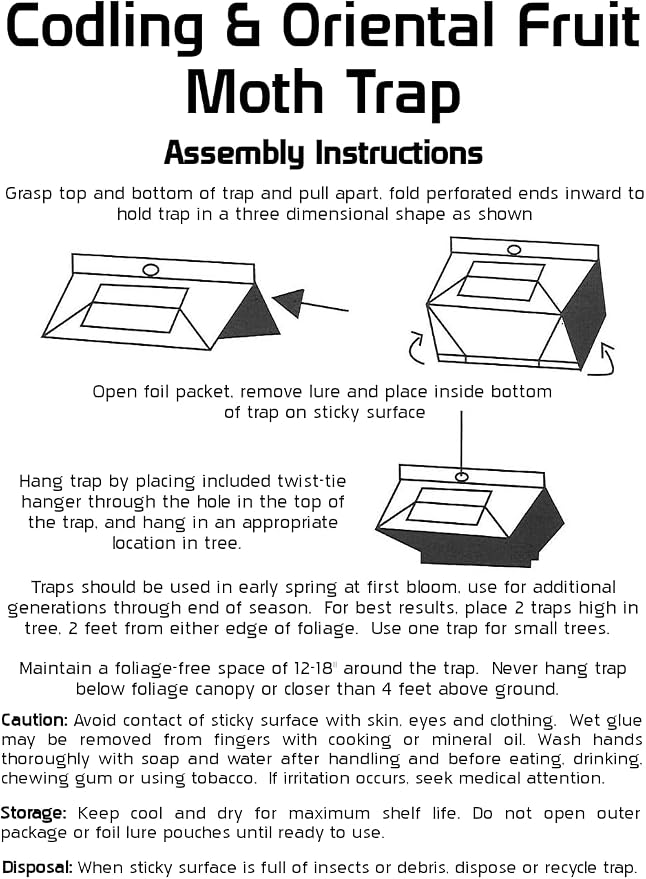
- Help protect your Apple, Crab Apple, Peach, Pear, Plum & other fruit trees from invasive and destructive moth larvae. Don't spray your trees and edible fruit if it isn't necessary! - Exclusive 3 component pheromone-based attractant is specific to Male AND Female Codling Moths & Male Oriental Fruit Moths - will not attract other insects or pollinators - Long Life 8 Week/60 Day pheromone lures - TWICE the lifespan of competitor's products - Trap kit includes 2x disposable wet glue traps, 2x pheromone lures and 2x twist ties for hanging (2 complete traps)
Product description
VivaTrap Codling Moth And Oriental Fruit Moth Traps by VivaGrow
VivaTrap VT-106
Codling Moth and Oriental Fruit Moth attack these trees and other species:
Codling Moth (Cydia pomonella) larvae are typically the cause of 'wormy' fruit, doing damage by stinging flesh and boring into seed cavities. Oriental Fruit Moth (Grapholita molesta) larvae attack both fruit and young shoots & twigs, primarily feeding around the pit of the fruit. VivaTrap! Codling Moth & Oriental Fruit Moth Traps utilize an exclusive 3 component pheromone lure to attract both Male AND Female Codling Moths + Male Oriental Fruit Moths to a sticky surface where they cannot escape.
Codling Moths are formidable pests, affecting agricultural crops and fruits. There are 4-6 generations per year, climate dependent.
Cydia pomonella
Codling Moths are distinguished from other similar moths in the Tortricidae family by the distinctive patterns on their forewings
Oriental Fruit Moths commonly affect apple, apricot, cherry, peach, nectarine, pear, plum, and quince trees. There are 4-7 generations per year, climate dependent.
Grapholita molesta
Oriental Fruit Moths are tan-white overall in color, have brown heads and grey-brown forewings with black dots along their edge
Larvae typically travel 6 to 10 feet in search of fruit. Larvae depend on fruits as a food source, as they cannot feed on leaves
Larvae bore into fruit within 24 hours of hatching from their eggs
Maturing larvae have pinkish-tan bodies and yellow-brown heads, young larvae are white-tan overall with black heads
Larvae prefer soft, nutritious tissue near seeds. Larvae are typically 1/2"~ in length, pupation typically occurs in early Spring
Share